Overview
The Memory Layer serves as the central repository for brand knowledge within Lupine. Think of it as the master memory hub where Lupine stores and references everything it knows about a specific brand.
Organizations managing multiple brands can maintain separate memory profiles for each brand, ensuring that analyses remain aligned with brand-specific goals, audiences, messaging, and strategic priorities.
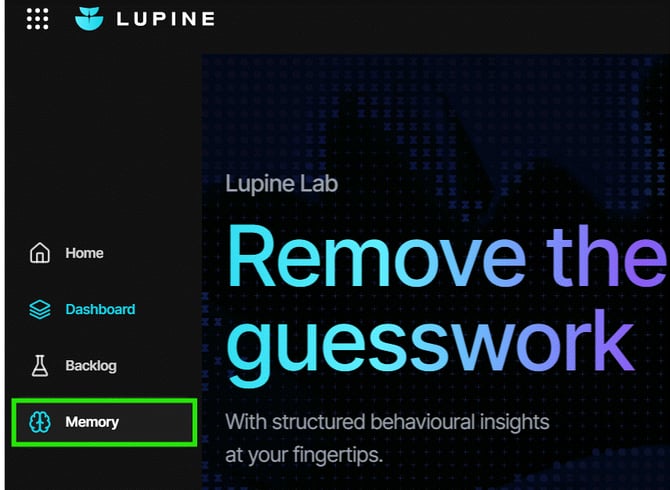
What is the Memory Layer?
The Memory Layer contains the persistent business context associated with a brand. This information acts as the foundation for all future analyses and helps ensure that recommendations are tailored to the unique characteristics of each business.
Each brand can have its own:
- Site Context
- Business Objectives
- Target Audiences
- Brand Voice & Messaging
- Positioning & Differentiators
- Vocabulary Guidelines
- Business Constraints
- Strategic Theories and Assumptions
Why the Memory Layer is Important
For teams working across multiple websites or brands, context can vary significantly.
The Memory Layer ensures that:
- Every brand maintains its own knowledge base.
- Context remains consistent across analyses.
- Recommendations reflect the brand's unique positioning.
- Teams do not need to repeatedly enter the same information.
- Insights become increasingly relevant over time.
Example
An agency may manage multiple brands simultaneously. Each brand has different audiences, messaging, goals, and competitive landscapes.
By storing brand-specific context in the Memory Layer, every analysis automatically incorporates the correct background information for the selected brand.
How Memory is Applied
When a user launches a new analysis, Lupine automatically references the stored memory associated with that brand.
The stored Site Context becomes part of the reasoning process and is applied throughout the analysis lifecycle, including:
- Opportunity identification
- User experience evaluations
- Experiment generation
- Messaging recommendations
- Prioritization decisions
- Strategic insights